Summary
Welcome back to Origin’s Token Holder Update. November delivered steady progress across Origin’s product line, with upgrades landing on OUSD and OETH, continued momentum in OGN buybacks, and strong early results from the Ether.fi eETH ARM. The team pushed forward on infrastructure improvements that simplify user experience, strengthen security, and set up the protocol for larger flows of institutional capital.
OUSD now operates with a clean USDC-only backing; OETH is in the process of its most significant staking upgrade to date, and the eETH ARM logged an impressive first month in private beta. Paired with strong protocol revenue and rising participation in OGN staking, November reinforced the durability of Origin’s model. Let’s dive into the details below.
Origin Token (OGN): November 2025
OGN continues to operate as the core value capture layer for Origin, with protocol fees flowing to buybacks and staking rewards. As product usage scales, these cash flows translate into steady accumulation of OGN and meaningful yield for OGN stakers. November’s numbers reinforce the strength of that model:
- Over 8.4 million OGN was bought back in November, bringing total buybacks to 47.7M OGN. Since the onset of the buyback program, over 7.37% of the supply has been bought back.
- All bought back OGN is used to fund staking rewards. Max locked OGN is currently earning 37.5% APY, with 39.7% of the circulating supply locked to earn rewards.
- The protocol generated $710,000 in revenue in November, with ~$150,000 in fees being sent to OGN stakers.
Ether.Fi eETH Automated Redemption Manager (ARM)
The Ether.fi eETH ARM entered private beta in November. Key metrics including volume, APY, and TVL are now available on our analytics page. While deposits remain closed, the strategy has achieved a 6.4% trailing 30-day APY during testing, indicating strong performance even in its early phases. We’re collaborating directly with the Ether.fi team to fine-tune execution and validate the strategy at scale.
The eETH ARM also proved effective in real market conditions, winning more than $1.3M in trading volume last month through integrations with top DEX aggregators. These early results give us confidence as we move toward opening deposits to the broader community.
Origin Dollar (OUSD): Now Backed 100% by USDC
OUSD’s migration to a fully USDC-backed design is now complete. This shift brings cleaner collateral, tighter risk controls, and a more predictable yield profile for holders. With one unified backing asset, the protocol can pursue higher-quality strategies on Morpho and streamline Origin Dollar’s overall architecture without the complexity of managing multiple stablecoins.
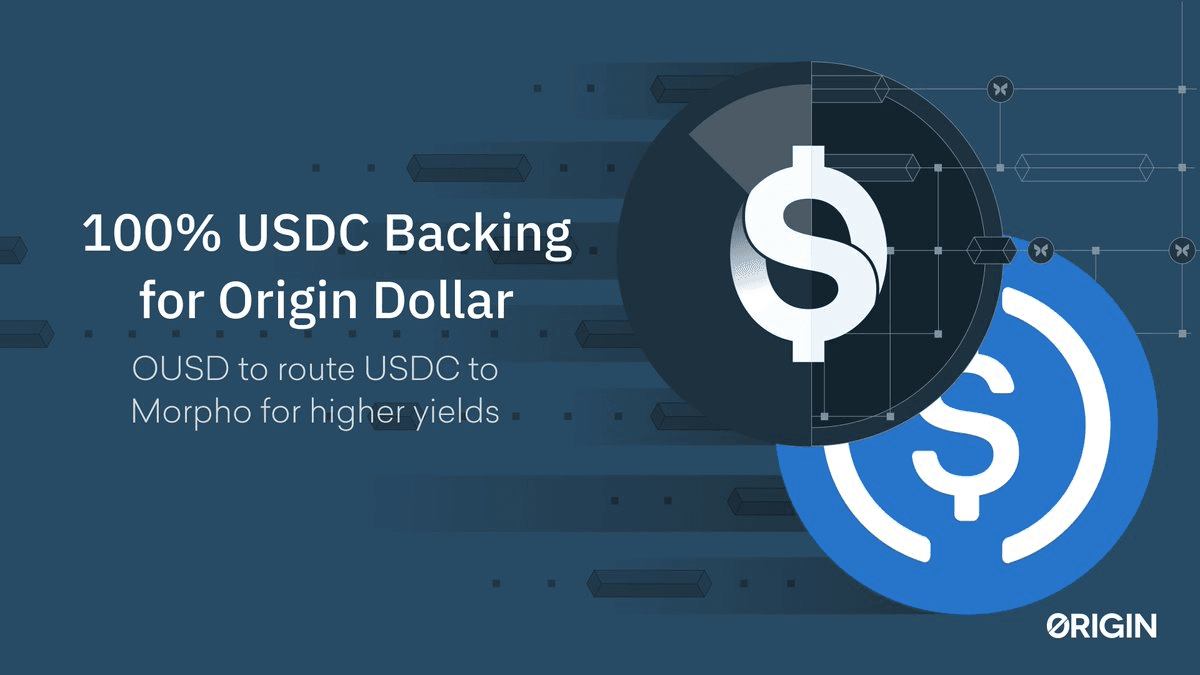
New yield strategies built around this simplified structure are expected to launch soon. We’re working closely with Yearn and Morpho to rebuild OUSD into a more scalable, widely used stablecoin. As new yield strategies roll out, holders can expect a smoother earning experience and more consistent performance.
Attracting Institutional Capital: OETH Staking Upgrade
The OETH staking upgrade is moving toward completion, with all three independent audits from Nethermind, OpenZeppelin, and Sigma Prime complete. This upgrade lays the groundwork for OETH to scale into deeper institutional participation while strengthening the protocol’s long-term security profile.
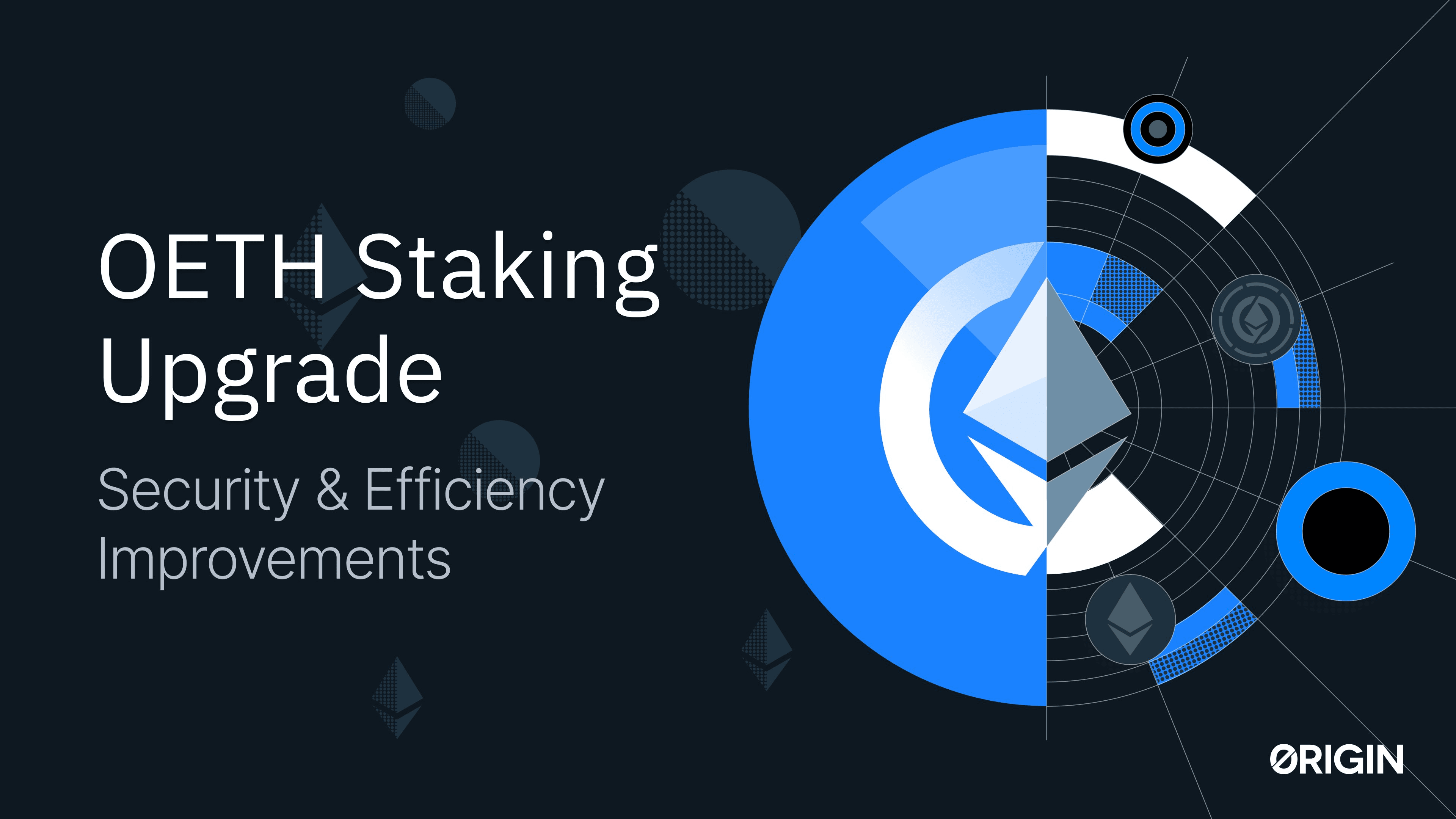
Validator migration has begun, and the new architecture will introduce several key improvements. Support for EIP-7251 allows larger validator sizes and more efficient operations, enabling partial withdrawals and faster compounding. The move to 0x02 validators strengthens key management and ensures safer handling of withdrawal credentials. And with native Merkle proof validation, the protocol eliminates oracle dependencies altogether by verifying Beacon Chain balances directly onchain.
These changes position OETH as one of the most transparent and operationally efficient staking assets available, designed for larger allocators that need predictable infrastructure and clean risk assumptions.
Product Metrics
See the list below for updates on total value locked and APYs for each of Origin's products:
- Origin Token (OGN) currently yields 37.5% APY on max locked xOGN with 39.7% of the supply locked for rewards.
- Origin Ether (OETH) achieved a 30-day trailing APY of 2.7% at $81.6M TVL.
- Super OETH (superOETHb) achieved a 30-day trailing APY of 3.64% APY at $57M TVL.
- Origin Sonic (OS) achieved a 30-day trailing APY of 4.2% APY at $1.5M TVL.
- Origin Dollar (OUSD) achieved a 30-day trailing APY of 3% APY at $6.3M TVL.
- The stETH ARM achieved a 30-day trailing APY of 6.2% APY at $16.7M TVL.
- The OS ARM achieved a 30-day trailing APY of 10.2% APY at $80K TVL.
In Case You Missed It
That wraps up November’s update. With OUSD’s upgrade finalized, OETH’s validator migration underway, and the eETH ARM showing strong early performance, the protocol continues to ship improvements that compound value back to OGN stakers.
Here are a few highlights worth revisiting from the past month:
- The End of Oracle Dependence: OETH Staking Upgrade
- OUSD Upgrade: 100% USDC Backing
- 1 Year of the ARM: $1.5B+ In Volume
As always, join the discussion in our Discord and follow us on X.
