Automated Redemption Managers: Reinforcing Liquidity Across DeFi
Automated Redemption Managers: Reinforcing Liquidity Across DeFi
Ethereum’s liquid staking market has matured into one of the largest and most systemically important segments in DeFi. Maintaining deep liquidity and a stable peg between LSTs and their underlying assets is essential for user confidence and overall market efficiency.
Origin’s Automated Redemption Manager (ARM) was built to address exactly that — automating arbitrage between LSTs and their underlying collateral while turning peg maintenance into a yield-bearing strategy. What began with stETH on Ethereum has expanded to new networks like Sonic, where the ARM supports OS liquidity and stability.
How the ARM Works
When a liquid staking token trades below its redemption value, the ARM buys it on secondary markets and redeems it for the underlying asset directly through the protocol’s withdrawal process. When market spreads tighten and lending yields are more attractive, the ARM dynamically routes capital to external protocols like Morpho on Ethereum or Silo on Sonic to earn additional yield.
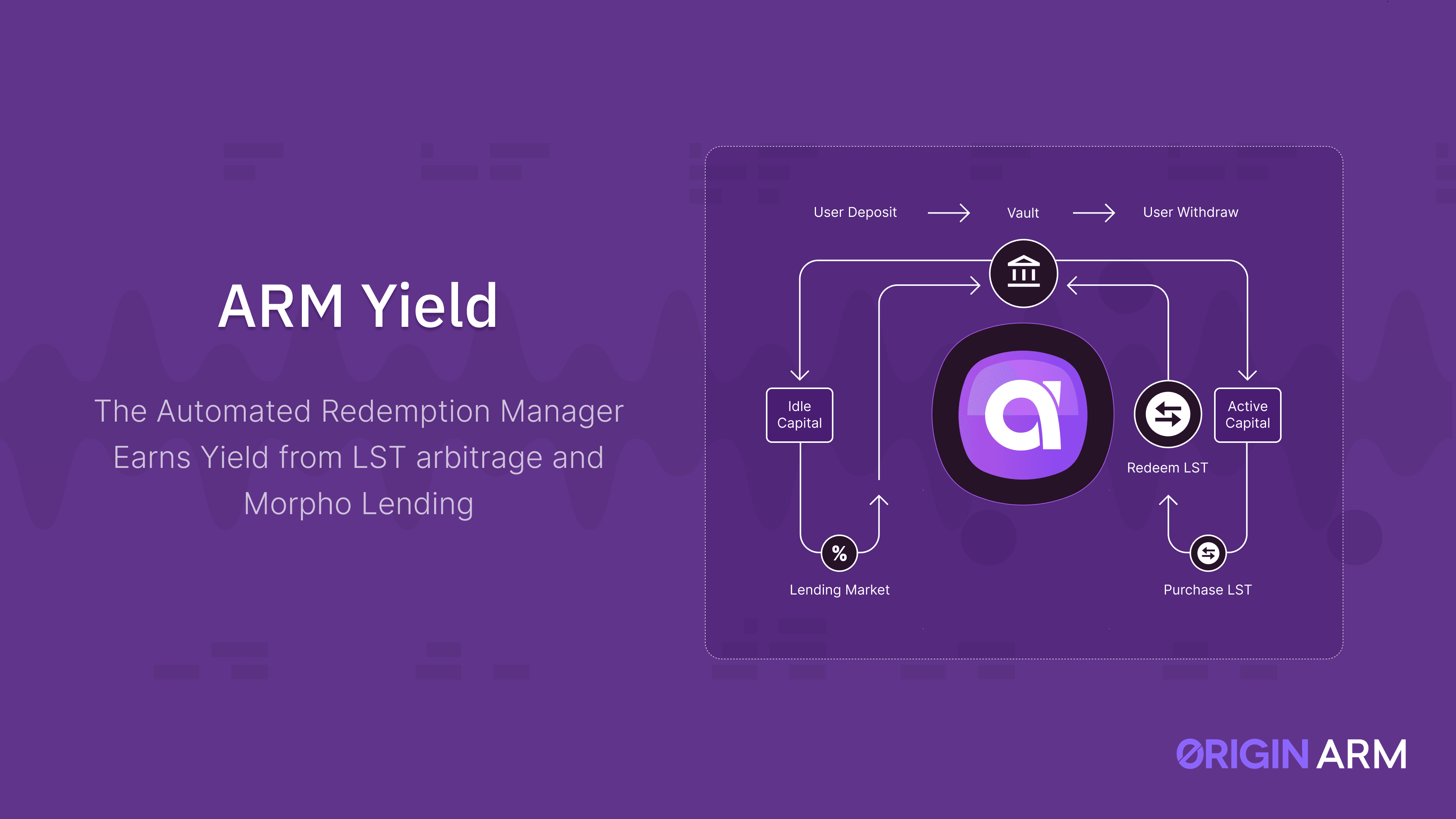
This creates a self-balancing mechanism that narrows peg spreads, restores market efficiency, and keeps liquidity productive in all market conditions. The ARM effectively transforms volatility into opportunity, capturing price spreads between LSTs and their backing collateral.
Reinforcing Liquidity for Lido stETH and Origin Sonic (OS)
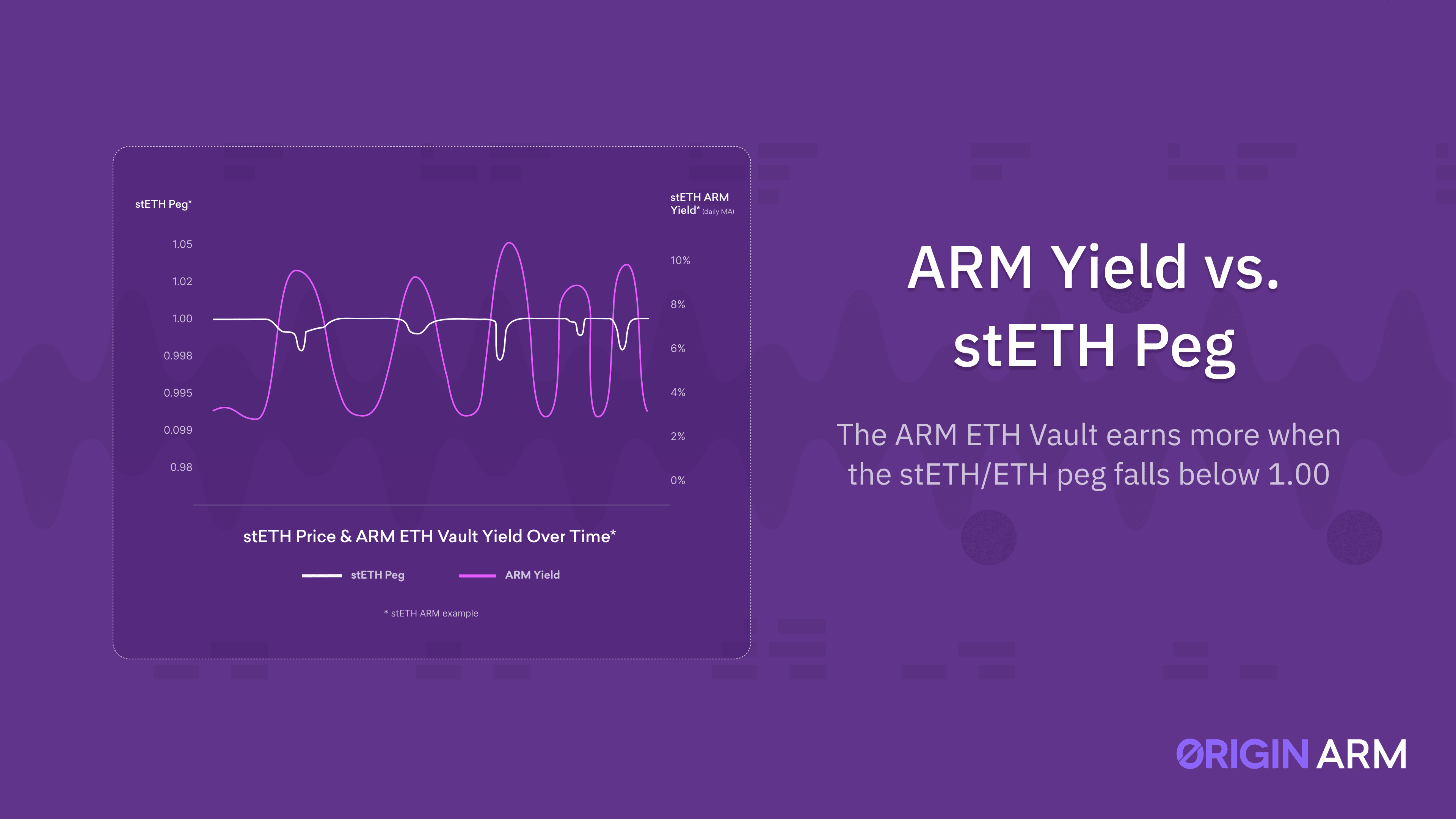
The stETH ARM has become a key component of onchain liquidity infrastructure on Ethereum. Supported by the Lido Ecosystem Foundation, it helps reinforce the stETH peg while earning sustainable yield through arbitrage and lending.
On Sonic, the OS ARM applies the same mechanism to maintain stability between OS and its underlying staked collateral. It automatically arbitrages OS markets and routes capital to Silo to capture lending yield when spreads are tight, strengthening both peg stability and liquidity across the Sonic network.
Together, these deployments demonstrate how the ARM can be adapted to any ecosystem or asset, scaling liquidity management through onchain automation.
A New Class of Yield Infrastructure
Unlike traditional LST yield strategies that depend solely on validator rewards or liquidity incentives, ARMs generate yield directly from market volatility. Capital is deployed where it adds the most value — tightening pegs, arbitraging inefficiencies, and earning from lending yields.
For liquidity providers, this design means exposure to organic, market-driven yield that can outperform standard staking returns while contributing to healthier market dynamics.
How the ARM Benefits OGN
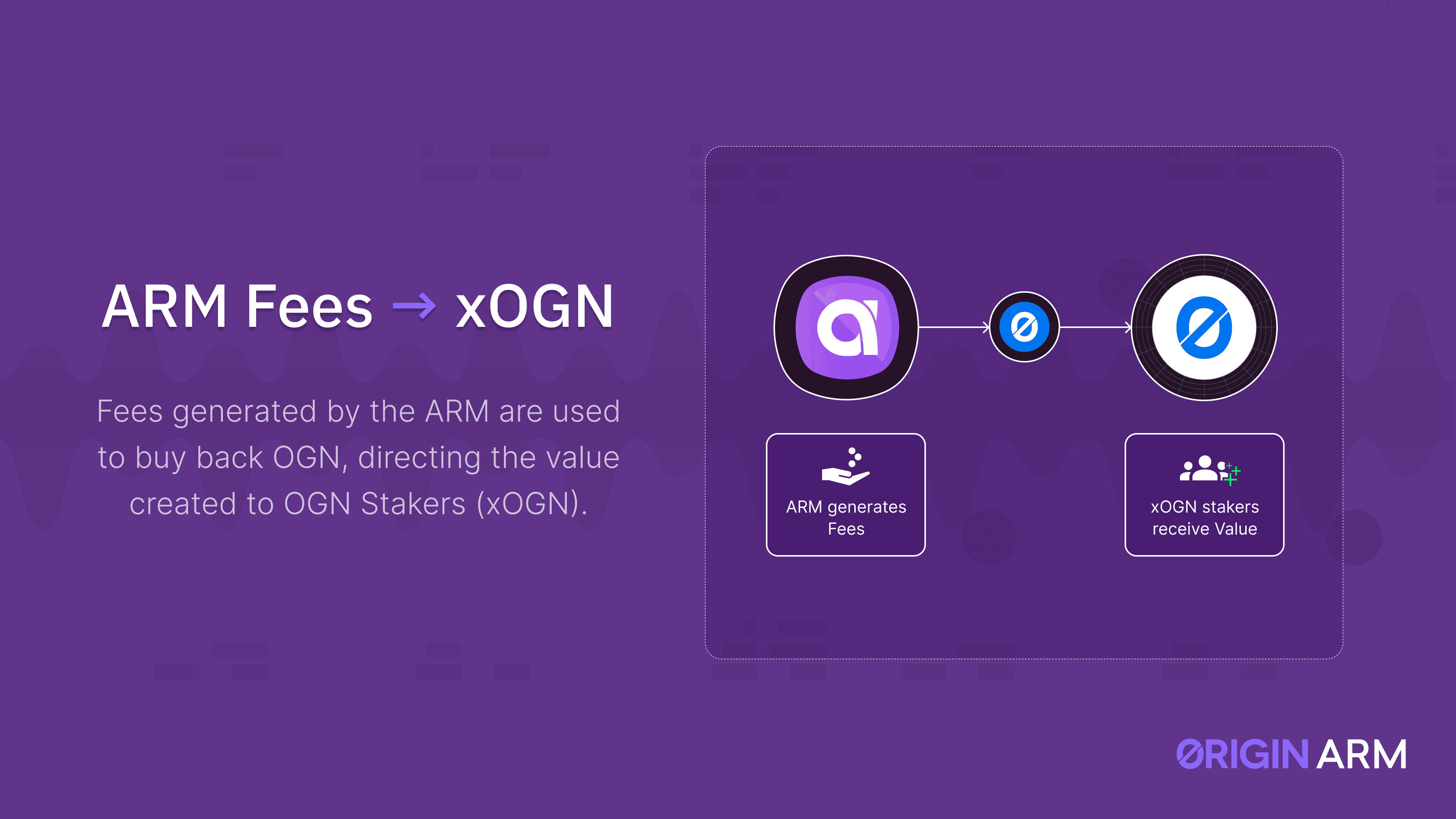
Every ARM deployment contributes to Origin’s broader tokenomics. Fees generated by ARMs are used to buy back OGN on the open market, directing value to xOGN stakers. As ARMs scale across networks and assets, they create an expanding stream of protocol-driven revenue that ties product growth directly to token holder value.
Looking Ahead
The ARM framework is evolving into a foundational layer for LST liquidity — aligning arbitrage, yield, and stability within a single mechanism. From Ethereum’s stETH ARM to the OS ARM on Sonic, each deployment strengthens the ecosystems it serves while reinforcing the value loop that powers Origin.
Earn yield while supporting market stability — deposit to the ARM vaults on the Origin dapp today.
